"There's more to discover at Franceschi Park," the Santa Barbara Parks and Recreation Department said on social media, as Edhat reported this fall. It's an understatement for a 17-acre hillside on the Riviera that most people know for one thing: the view from the top of Franceschi Road. The trail project the City started in late August is designed to change that. It links the parking lot to parts of the park that were easy to miss or hard to reach: a large sandstone bust, an upper meadow, and the plantings of a horticulturist who once ran a nursery on this ground.
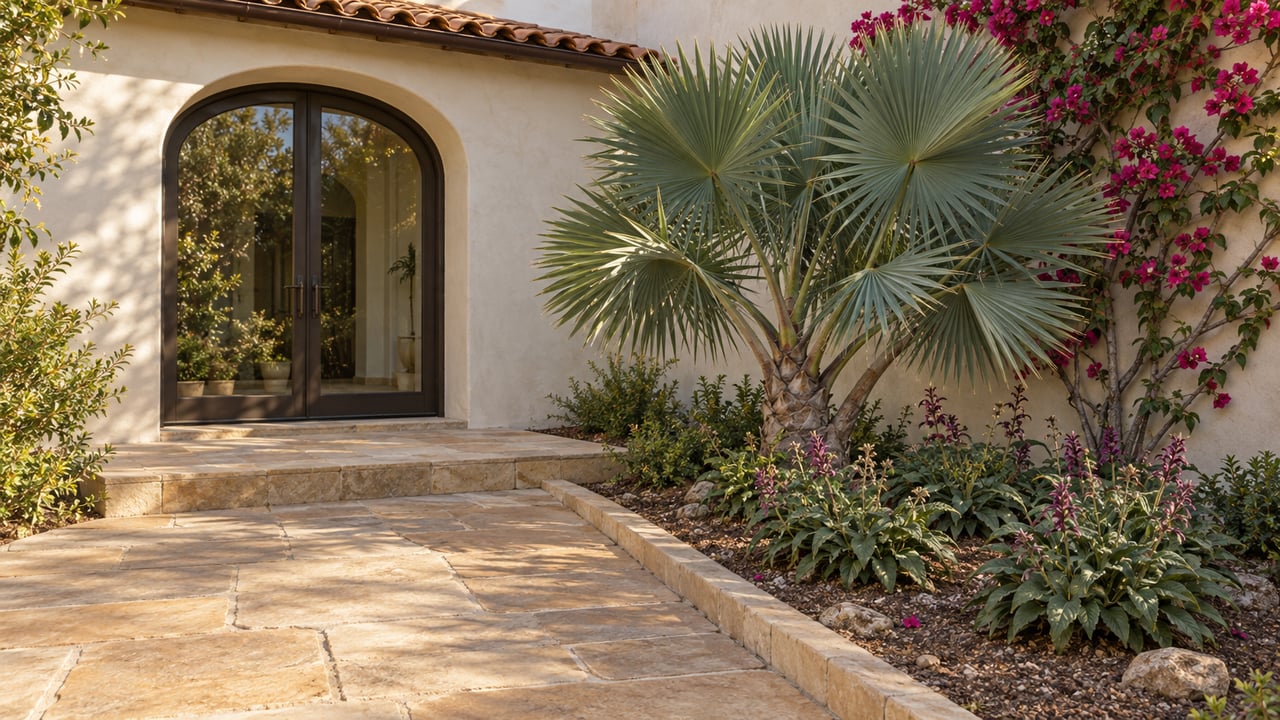
Franceschi Park began as a garden, and the new paths, the closing of old ones and the plans for the house at the top all point the park back toward that, with the new trails running through the old plantings on the way up to the meadow views.
Where the new trail goes
According to the City's August 26, 2026 project notice, crews are building more than 1,500 linear feet of new trail at the park. The connections run through four points:
- The parking lot, where the free on-site parking is and where most visits begin.
- The Franceschi Bust, a large sandstone bust honoring Dr. Francesco Franceschi, which the City lists among the park's lesser-known features.
- The upper meadow, reached through eucalyptus, towering cacti and oak trees, with views across Santa Barbara, Goleta and the ocean.
- The existing trail system, which the new segments are being built to join.
The new trails have compacted tread and drainage features meant to stop erosion and keep water from pooling, which the City describes as building a trail system that lasts. Three new benches made from repurposed wood are going in along the way, placed for resting and taking in the views.
The City expected trail work to continue into October. By the end of the month, some segments may still be wrapping up, so expect crews or fresh trail edges on your first walk. The project is paid for by the City's General Fund.
Whose face is on the sandstone
The bust the new trail leads to is the best place to see why this park looks the way it does. Franceschi ran a botanical garden and nursery here from 1903 to 1913. Edhat notes that during that decade he introduced hundreds of exotic plant species to Southern California, and some of them still grow in the park.
The property has gone through several hands and several plans since then, and each one left something you can still walk past:
| Period | What happened on the hill |
|---|---|
| 1903 to 1913 | Franceschi operates his nursery and botanic garden on the site |
| 1905 | He builds a redwood Craftsman-style home and names the house and garden "Montarioso" |
| 1926 to 1927 | Alden Freeman, a social reformer and philanthropist, acquires the house and grounds and turns the house into the Italianate-style villa known as Franceschi House |
| 1931 | Freeman gives the property and house to the City of Santa Barbara as a public park |
| About 1936 | A Works Progress Administration plan adds the entry drive off Franceschi Road, walls of stacked broken concrete, two barbecue areas and winding paths |
| 1938 to 1953 | Peter Riedel, Franceschi's former partner, lives in the house as a horticultural consultant to the City |
| 1956 to 1963 | City arborist Will Beittel lives in the house, teaches night horticulture classes and raises trees for the City |
That WPA layer matters for anyone using the new trails. The "numerous winding paths through the vegetation" from the 1930s are the bones of the system the City is now repairing, connecting and in places retiring, according to Pacific Horticulture's history of the park. The same history points to a stone staircase in the lower park off Dover Road that matches a plan by landscape architect Ralph T. Stevens. It may have been built with Depression-era relief funds.
What the garden has held onto
The City's own park page says the grounds contain "a rare botanical collection." The most detailed account of that collection comes from Pacific Horticulture's two-part history, written about two decades ago. Read it as a record of what the garden held then, which makes it a good field guide for spotting what may still be there.
Franceschi laid out a palm "amphitheater." When the City surveyed the site in 1932, fourteen palms remained there, all fairly drought-tolerant species. The article said some were still standing nearly a century after he planted them. The same survey work traced the locations of some of his original trees, including two of his special avocados. The first part of the history names dragon trees, Dracaena draco, as the plantings that marked the garden's historic entrance.
Later stewards added their own plantings. Along the entry drive the article identifies a Greyia sutherlandii, a South African tree probably planted by Beittel in 1963. Riedel is credited on a plaque at the entry gate with planting the avenue of trees leading to the parking lot, though the article noted that few mature specimens remained there. Beittel's 1963 survey was the first catalog of the park's specimens. He counted more than fifty species introduced by Franceschi still growing on the grounds, and some of those have since died.
Since the City took over, its approach has been to keep planting exotics, both species Franceschi knew and new ones. The trees and succulents along the new trails are a mix of the 1900s, the 1960s and everything after.
Why some familiar paths are going away
Adding trails is only half the project. Crews are also maintaining every existing trail and path in the park. They are repairing sections of cracked or crumbling concrete on paths and stairways while keeping the park's character, clearing overgrowth, dealing with erosion and unstable slopes, and leveling uneven surfaces.
Unsafe or redundant trails are being decommissioned. Crews lay natural materials over them so the surrounding hillside can gradually take the old routes back. If a shortcut you've used for years is suddenly covered in brush and mulch, this is the reason. Fewer, better-built paths mean the ground between them can recover.
That recovery is the next phase. The City says native habitat restoration will begin this winter, after the trail work. Edhat describes it as part of a broader effort that includes removing invasive species. Walk the meadow loop now and again in spring, and you'll see the same ground in two stages.
Before you head up Franceschi Road
The park has its own schedule, different from most City parks, and the parking lot is the detail that catches people out.
- Hours: Franceschi Park is one of three City parks, along with Skofield Park and Hilda McIntyre Ray Park, that open at 8:00 a.m. instead of the usual earlier time. It closes half an hour after sunset.
- The lot locks: the on-site parking lot is locked every night, and a car left after closing stays there until the next morning. With sunsets coming earlier, a late walk out to the upper meadow needs a margin for getting back to the car.
- Parking: the on-site lot is free.
- Dogs: dogs are allowed on leash.
- Amenities: the park has picnic areas and walking paths. The site has restrooms, and the City's Franceschi House notice mentions planned minor accessibility upgrades.
- Address: 1501 Franceschi Road, Santa Barbara, CA 93103. The City's park page has the map link.
The house at the top, and the overlook planned to replace it
The new trails also fit the City's long-term plan for the building at the center of the park. Franceschi House has deteriorated over decades because there was no funding source to maintain a sizeable three-story building. After several unsuccessful restoration attempts going back to 1971, the City Council voted unanimously in 2018 to replace it with an open-air pavilion. The Pearl Chase Society, which had once tried to raise money to restore the house, supported the decision.
Then the public weighed in. In 2024 the City presented four design concepts, and feedback strongly favored a structureless overlook that would show off the views and honor Franceschi's horticultural legacy through landscaping. So the plan for the center of the park is a terrace and plantings, and the trails are how people will move through the garden around it.
The Reimagining Franceschi House project page sets a long timeline. The Historic Landmarks Commission commented on the preliminary design in January 2026. A multi-year environmental review begins in 2026, and final planning permit and design approvals, along with construction documents, are expected in 2028. The design phase and environmental review are funded with $950,000 in City Capital Funds. The City has not yet allocated money for construction.
The house will stand on the hill for at least a few more years. This fall's trail work means the garden around it, which Franceschi planted, the WPA connected with paths and Riedel and Beittel kept growing, is getting a route from the parking lot to the bust and up to the meadow.
Out-of-town guests want to know where the views are, and owners want a morning plan for the people staying in their homes, so we keep track of places like Franceschi Park for both. If you'd like a Riviera walk added to your guest book or simply want to talk about life on this side of town, Samantha Ireland is happy to help. Let's Connect.